



Smart Space-Saving Furniture Ideas for Tiny Homes in the USA That Actually Work in Real Life
Tiny homes are no longer a niche trend in America. They have become a practical response to rising housing prices and a growing desire for simpler living. But here’s the real challenge most people face: how do you fit a full lifestyle into a few hundred square feet without feeling boxed in?
That’s exactly where well-planned compact furniture changes everything. Instead of thinking in terms of size limits, you start thinking in terms of flexibility. A living room can become a bedroom. A dining area can disappear into the wall. Suddenly, space doesn’t feel small anymore it feels smart.
Why Space-Smart Furniture Matters in Modern Tiny Homes
Small homes demand smarter decisions. Every piece you bring inside affects movement, comfort, and storage. Without thoughtful planning, even a stylish setup can quickly feel crowded.
Designers in the U.S. increasingly rely on multifunctional furniture systems, minimalist interior layouts, and modular storage solutions to solve this. The goal isn’t just saving space—it’s creating flow. For example, a Murphy bed can instantly turn a bedroom into a home office during the day, which is especially useful for remote workers.
Real estate studies in urban areas like Portland and Austin show that homes under 400 sq. ft. feel significantly more livable when furniture serves at least two functions. That’s not theory—it’s lived experience.
How Smart Furniture Is Built for Small Living in the USA
Modern compact furniture focuses on three things: transformation, storage, and durability. Without these, small homes quickly become cluttered.
Take a standard sofa bed like the IKEA FRIHETEN. In sofa mode, it takes about 90 inches in width and 37 inches in depth. When extended, it becomes a full bed around 79 inches long. That single shift replaces both a couch and a guest bed.
Another example is the Expand Furniture “Murphy Desk Bed.” It folds vertically into a wall cabinet and includes a work surface that appears when closed. These types of designs often range from $1,500 to $4,000, depending on customization.
Here’s a simple breakdown:
| Furniture Type | Typical Size | Average Cost (USA) | Trade-off |
| Murphy Bed | 80” W x 16” D (closed) | $1,200–$4,500 | Higher upfront cost |
| Sofa Bed (IKEA FRIHETEN) | 90” W | $600–$900 | Heavier frame |
| Drop-leaf Table | 40”–70” expandable | $150–$500 | Limited seating stability |
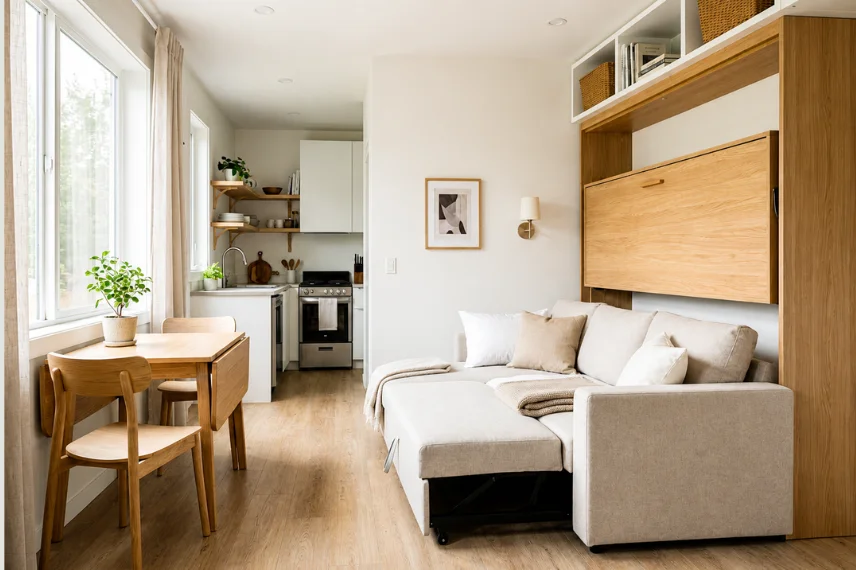
Practical Furniture Ideas That Maximize Every Inch
The most effective setups in tiny homes rely on movement and hidden storage. Instead of filling a room, you allow it to change purpose throughout the day.
A loft bed is one of the most popular solutions in homes under 300 sq. ft. Raising the sleeping area to about 5.5–6.5 feet creates usable space underneath for a desk or seating nook. Brands like Harriet Bee and Walker Edison offer sturdy loft beds in the $300–$700 range.
In kitchens, pull-out pantry systems are a game changer. A 12-inch-wide vertical pull-out cabinet can store spices, cans, and dry goods without taking up floor space. Companies like Rev-A-Shelf specialize in these systems, often costing between $200 and $600 depending on configuration.
Even coffee tables are evolving. Lift-top designs such as those from West Elm or Wayfair’s Mercury Row line rise to dining height. This removes the need for a separate dining table in ultra-small apartments.
Room-by-Room Strategies That Actually Improve Livability
Living rooms in tiny homes often double as everything else. Storage ottomans, like those from IKEA KVISTBRO, store blankets while serving as seating or side tables.
Bedrooms benefit most from vertical thinking. A 6×8 ft sleeping zone can be converted into a dual-purpose space using loft systems or Murphy beds. Under-bed drawers add nearly 40–60 cubic feet of storage, replacing an entire dresser.
Bathrooms are usually the most overlooked area. A simple wall-mounted cabinet above the toilet can add 10–15 inches of storage depth without affecting movement. That small change often removes countertop clutter completely.
Real-World Tiny Home Example From Oregon
A couple living in a 320 sq. ft. tiny home in Bend, Oregon redesigned their entire layout using modular furniture. They installed a Murphy bed from Clei (an Italian design brand) costing around $3,800 and paired it with a fold-down dining table.
Before renovation, the home felt cramped with constant furniture overlap. After installation, the same space allowed a clear walking path of nearly 36 inches across the main living area.
Their biggest insight wasn’t just space gain—it was mental clarity. Fewer objects meant fewer distractions.
Cost vs Value: What You Should Expect
Compact furniture is not always cheap, but it pays off differently. A single high-quality convertible piece can replace two or three traditional items.
Budget setups can start around $1,500 total for basic essentials. Mid-range tiny home interiors often fall between $3,000 and $8,000 depending on customization. Premium modular systems can exceed $10,000 but offer long-term durability and design flexibility.
The trade-off is simple: pay more upfront, save space and future replacement costs later.
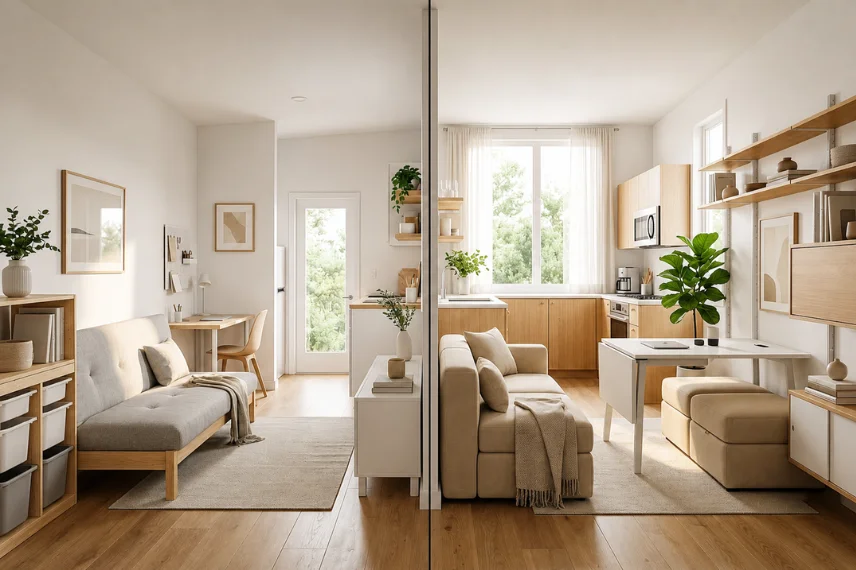
Where Design Meets Function in Tiny Living
A well-designed tiny home doesn’t feel small because everything has a purpose. Movement matters more than square footage. Light colors, mirrors, and open floor planning enhance the effect even further.
Interior designers often recommend leaving at least 30% of floor space open at all times. That breathing room prevents visual clutter and significantly improves comfort.
Final Thoughts on Smart Living in Compact Homes
Tiny home living in the USA is not about restriction—it’s about intention. When every item earns its place, the entire home feels more peaceful and efficient.
Smart furniture choices turn tight layouts into flexible environments that adapt throughout the day. A living room becomes an office. A bedroom becomes storage. Nothing stays fixed, and that’s the real advantage.
For homeowners exploring modern compact solutions, platforms like Flip Furniture offer inspiration and practical ideas tailored to real small-space challenges. Instead of forcing a lifestyle into a small footprint, thoughtful design makes that footprint work harder for you.
The result is simple: less waste, more function, and a home that finally feels right-sized instead of restricted.
FAQs
What is smart space-saving furniture for tiny homes in the USA?
It refers to furniture designed to maximize small spaces using multifunctional, foldable, or hidden storage features that improve comfort and usability.
Why is space-saving furniture important for tiny homes?
Because tiny homes have limited space, smart furniture helps reduce clutter and makes living areas more functional and comfortable.
What is the best furniture for small spaces in the USA?
Convertible sofas, loft beds, foldable tables, and wall-mounted storage units are among the most effective options.
Is smart furniture expensive for tiny homes?
Not always. Many affordable options and DIY solutions are available in the USA market for budget-friendly living.
Where can I find smart furniture ideas for tiny homes?
You can explore design inspiration and practical solutions on websites Furniture Ideas like Flip Furniture and other home improvement platforms.
More Furniture Makeover Tips:
Classic Furniture Design Ideas for Every Home
Antique Bedroom Furniture Sets: Timeless Designs for Your Home
Antique Pool Table Furniture: Timeless Designs & Buying Guide


